Uganda, often hailed as the "Pearl of Africa," is currently undergoing a radical transformation in its travel sector. Moving beyond its traditional image of gorilla trekking, the nation has launched a series of Uganda’s Prepared Partnership in Field of Tourism designed to integrate technology, sustainability, and private-sector investment. As of late 2025, these initiatives are steering Uganda toward an ambitious goal: becoming one of Africa’s top five tourist destinations.
How Does the UTB and UCC Partnership Impact Your Travel Experience?
One of the most notable "Prepared Partnerships" is that of the Uganda Tourism Board (UTB) and the Uganda Communications Commission (UCC). The goal of this partnership is to transform the complete visitor journey into a digital one.
- Seamless Connectivity: Mobile and broadband networks' coverage is being extended to off-grid locations such as Kidepo Valley and Bwindi.
- Digital Booking Platforms: The use of innovative technological solutions makes the process of lodging, permits, and tours booking very convenient.
- Real-Time Data: Live updates on conservation, alert on wildlife sightings, and certification of eco-lodges can now be accessed by travelers through mobile apps.
What Are the New "High-Growth" Segments in Ugandan Tourism?
The 2025 policy identifies several niche areas that are being developed through public-private partnerships:
- MICE Tourism: (Meetings, Incentives, Conferences, and Exhibitions) aimed at making Kampala a hub for international summits.
- Sports Tourism: Leveraging the AFCON 2027 hosting rights to build world-class stadiums and sports facilities.
- Oil and Gas Corridor Tourism: Developing unique tours around the Albertine Rift region.
- Cultural Heritage: Partnering with traditional kingdoms (Buganda, Bunyoro, Tooro) to showcase royal trails and UNESCO sites like the Kasubi Tombs.
How Can the Tourism Industry Be Improved in Uganda?
Uganda is a country with very rich tourism potential, such as the amazing sceneries and even the animal which can’t be found anywhere else, the tourism industry can be improved by introducing several kinds of strategies such as:
- Infrastructure Development: Make the roads, airports, and public transport better, so that visitors can easily get to the tourist spots.
- Marketing and Promotion: Use global campaigns and social media to present Uganda's attractions and get the attention of the overseas tourists.
- Training and Capacity Building: Provide the hotel and restaurant staff with the necessary skills in customer service and tour management to make the visitor's experience pleasant.
- Sustainable Tourism Practices: Encourage the use of green tourism to maintain the habitats and animals.
- Community Involvement: Work with the local people in tourism projects to make sure that the benefits are given to a wide range of people.
- Safety and Security Measures: Improve the safety measures for the visitors’ peace of mind.
Following these actions, Uganda may surely become the most visited country in Africa when it comes to tourism.
How Does Uganda Benefit from Tourism?
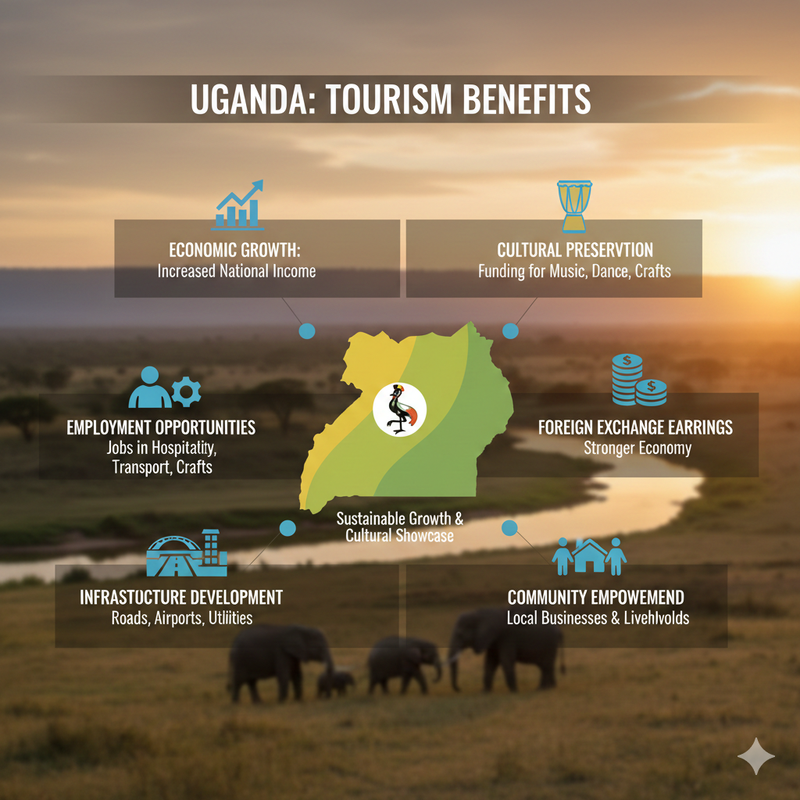
Tourism is an essential part of Uganda's economy and the country's overall welfare. Here is a summary of the benefits:
- Economic Growth: Tourism leads to an increase in national income through hotels, tours, and local services.
- Employment Opportunities: The sector also provides direct and indirect employment in areas such as food and beverage, transportation, guiding, and crafts, thus impacting positively on the level of unemployment.
- Infrastructure Development: The tourist activities also lead to development of the necessary facilities such as roads, airports, and public utilities that the local population enjoys as well.
- Cultural Preservation: Tourism allows the world to discover Uganda's rich heritage and in turn, it gives the much-needed financial support for the preservation of arts like traditional music, dance, and crafts.
- Foreign Exchange Earnings: Foreign tourists bring in dollars, which in turn, makes the economy of Uganda stronger.
- Community Empowerment: The communities are the first beneficiaries of the tourism industry as they get opportunities to set up businesses, get trained, and generally raise their standards of living.
If Uganda manages to use the tourism sector wisely, it can grow sustainably and at the same time, display its stunning nature and rich culture.
What Is the Role of Infrastructure in Tourism Development in Uganda?
Uganda is fortunate to have a good and reliable infrastructure that contributes immensely to its tourism potential. The following are the main reasons why infrastructure is essential in the tourism industry in Uganda:
- Excellent Accessibility: The roads, airports, and transport networks that have been developed make it very easy and quick to reach national parks, wildlife reserves, and historical sites.
- Great Hospitality and Accommodation: Lovely hotels, lodges, and guesthouses improve the overall satisfaction of the tourists and make them want to stay longer.
- Advancement in Communication Networks: The tourists can easily plan their trips, post about their adventures, and even call for help thanks to the internet and mobile networks that are not only reliable but also quite good.
- Provision of Safety and Security: The right lighting on the streets together with proper signage and emergency infrastructure help to make travel safe.
- Support for Adventure and Eco-Tourism: The construction of trails, viewing platforms, and visitor centers in parks and natural reserves adds to the tourists’ experiences.
- Economic Multiplier Effect: The improvement of infrastructure attracts more tourists who in turn support local businesses, employment, and community development.
The investment in infrastructure is thus very critical for Uganda to realize its fullest tourism potential.
How Can Sustainable Development Be Achieved in Uganda?
Uganda can reach the goal of sustainable development through the combination of economic growth, social welfare, and environmental protection. The main actions to be taken are:
- Renewable Energy: The investment in solar, hydro, and wind power reduces the use of fossil fuels and at the same the protection of the earth's resources.
- Sustainable Agriculture: Adopting the climate-smart approach to farming, using organic practices, and protecting the soil will lead to the long-term availability of food.
- Environmental Conservation: Forests, wetlands and the habitats of wild animals are to be preserved by means of law, community programs, and eco-tourism.
- Education and Skill Development: Education and vocational training will be offered to empower the communities with the necessary knowledge and skills for the sustainable livelihoods of the future.
- Infrastructure Planning: The roads, housing and urban areas will be constructed with the least possible impact on the environment and the use of green building practices will be emphasized.
- Public-Private Partnerships: The private sector will be involved in the projects for the sustainable development of the energy, transport, and tourism sectors through the provision of funds and other resources.
- Community Engagement: The local communities will be given the right to participate in the decision-making process and share the benefits in order to make the development process inclusive.
Through these measures Uganda will have the ability to grow economically while at the same time safeguarding its natural and social resources for the coming generations.
What Is the Fee for the Kenya eTA?
When applying for a Kenya ETA Fees, a processing fee is required to complete your application. This fee is mandatory for approval and varies depending on your nationality and type of travel.
- Processing Requirement: The eTA fee must be settled before its grant.
- Nationality-Based Fee: The amount of the fee that applies is set in relation to the traveler's passport issuing country.
- Online Payment: The fee is commonly settled using electronic channels at the time of application.
- Admission Right: The eTA along with the corresponding fee payment gives the privilege of entering Kenya.
- Stay Informed: The method of payment and the fee might change, hence it is advisable to double-check before sending your application.
- E-confirmation: The eTA, when approved, is sent electronically for travel use.
Why Is Kenya Important to Uganda?
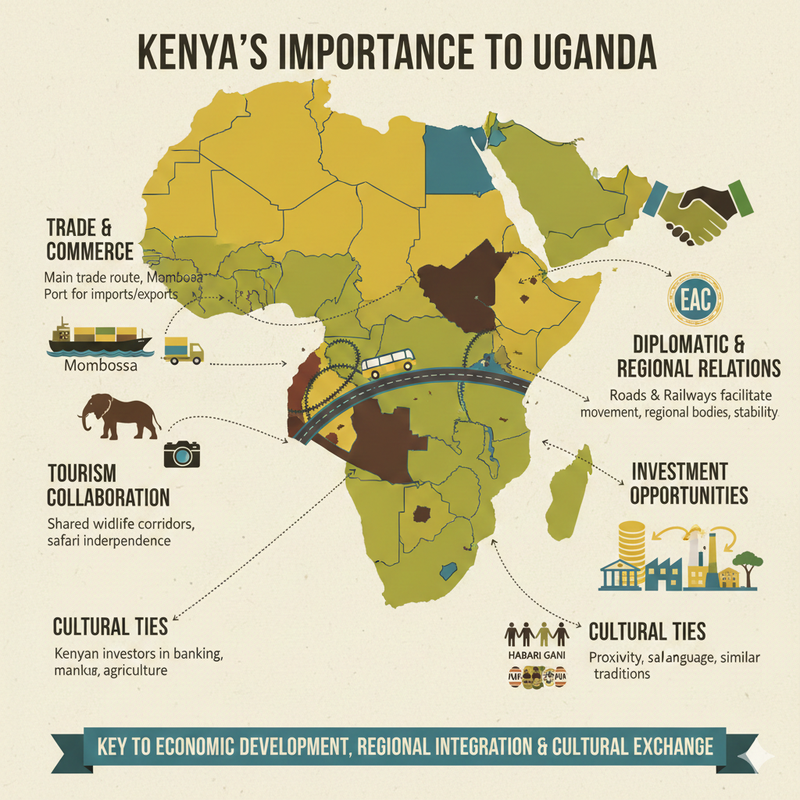
Uganda views Kenya as a country with huge importance economically, socially, and strategically. The following are the major points:
- Trade and Commerce: The port of Mombasa being the principal one, among others, Kenya is the main route for Uganda’s imports and exports thus engaging the regional trade.
- Tourism Collaboration: The wildlife corridors between the two countries and the tourists coming to Uganda and Kenya for safaris are the main reasons for the two nations' tourism sectors interdependence.
- Transport and Connectivity: The movement of goods and people is made easier by the good transportation systems—roads and railways—established throughout Kenya and Uganda which culminate into regional integration.
- Diplomatic and Regional Relations: Political stability and economic growth are being assured by the partnership between Kenya and Uganda in the East African Community (EAC) and other regional organizations.
- Investment Opportunities: The banking, manufacturing, and agriculture sectors in Uganda have the lion's share of the Kenyan investors’ input in the country’s economy.
- Cultural Ties: The proximity of the two nations, with a border that allows free movement of people between them, as well as a common language and similar traditions, all contribute to the strengthening of social and cultural connections between the two.
In conclusion, the role that Kenya plays in Uganda’s economic development, regional integration, and cultural exchange is very important.
What Is the Leading Tourist Attraction in Uganda?
Uganda’s number one tourist attraction is Bwindi Impenetrable National Park, which has won a worldwide fame for its gorilla population. Gorilla trekking, which is a one-time encounter with nature, is the main reason for people visiting Uganda from all over the world.
Among the other major attractions that can be found in the country are:
- Murchison Falls National Park: The amazing waterfall where the Nile River goes through a narrow gorge is the main reason for the park's fame.
- Queen Elizabeth National Park: The park is home to a great variety of wildlife, such as elephants, lions, hippos, and numerous birds.
- Lake Bunyonyi: It is a place with very nice views, and it also provides activities like boating and relaxation.
- Rwenzori Mountains: The mountains attract trekkers with their adventurous hikes and beautiful mountain sceneries.
The mix of animals, nature that is different and adventure activities that Uganda offers makes it a major spot for international tourists.
Which Field Is Best for Tourism in Uganda?
As far as Uganda is concerned, the wildlife and nature-based tourism field is the most promising among the several sectors that contribute to tourism. The major areas are:
- Wildlife Safaris: National parks like Bwindi Impenetrable, Queen Elizabeth, and Murchison Falls are the places where tourists can see gorillas, enjoy game drives, and go bird watching.
- Eco-Tourism: Uganda has a unique landscape made up of lakes, rivers, and mountains which offer various sustainable tourism activities such as hiking, boating, and staying at eco-friendly lodges.
- Cultural Tourism: Cultural communities and heritage sites allow you to be a part of the experience, as they present ways of life through music, dance, and traditional crafts.
- Adventure Tourism: Many activities such as white-water rafting on the Nile, climbing mountains in the Rwenzori range, and zip-lining in forested areas are designed for excitement-seekers.
The combination of wildlife, eco-tourism, and adventure tourism is a sure way to attract many visitors, make the growth sustainable, and use Uganda’s natural and cultural resources to the fullest.
What Is the Name of the Border Between Uganda and Kenya?
- The Busia Border, which is situated in the eastern region of Uganda, is the principal border crossing between Uganda and Kenya. This point not only ranks among the most frequented but also among the most vital ones in terms of trade and transit between the two nations.
- The Malaba Border, also located in eastern Uganda, is another significant border crossing and it is the main route for the transfer of huge quantities of goods and people between the cities of Nairobi and Kampala. Both borders are very important in the context of regional trade, tourism and the overall East African connectivity.
- They are the points that not only facilitate but also secure the daily flow of goods, people and services between Uganda and Kenya.
What Currency Is Being Used in Uganda?
Uganda’s official currency is the Ugandan Shilling (UGX). It is used for every transaction made in the country such as shopping, transportation, accommodation, and even tourism activities.
- Some crucial points regarding the Ugandan Shilling are its denominations which are in both coins and banknotes daily.
- Exchange: You can exchange it at the banks and forex bureaus, and also in the major hotels; larger towns accept international credit and debit cards.
- Usage: Necessary for all local transactions and easy to use for travelers moving around the country.
The Ugandan Shilling is the backbone of the country’s economy and it is also very much involved in the day-to-day life of the people in Uganda.
What Are the Best Things to Do in Uganda?
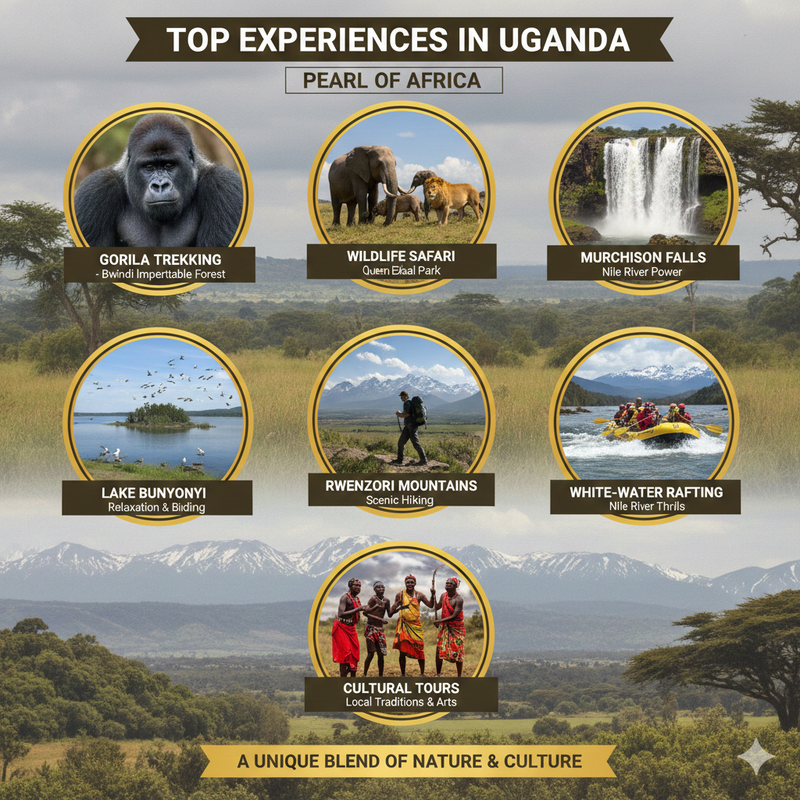
Nature lovers, adventure seekers, and culture enthusiasts will find a lot to choose from Uganda's extensive and varied activity list. Among the most enjoyable and exciting activities to partake in are:
- Gorilla Trekking in Bwindi Impenetrable Forest: Get to see these magnificent animals really close since they do not mind human presence.
- Safari in Queen Elizabeth National Park: Experience thrilling game drives while watching elephants, lions, hippos, and a great variety of birds.
- Visit Murchison Falls National Park: Behold the amazing power of the Nile River as it thunders through the famous falls.
- Explore Lake Bunyonyi: Have fun, watch birds, and chill out amidst beautiful scenery.
- Hike the Rwenzori Mountains: The famous mountain range will give you both stunning views and great hiking trails.
- White-Water Rafting on the Nile: The river is one of the most popular spots for rafting due to its fun and thrills.
- Cultural Tours: Visit villages and see the performance of local musicians, dancers, and artisans while you learn about their customs.
Uganda is a combination of nature and culture, which makes it a one-of-a-kind travel destination.
Conclusion
The partnerships in tourism that Uganda has made ready are a reflection of a strategic approach that consists of government initiatives, private investments, international collaborations, and community involvement. Uganda is not just the case that it is strengthening its global tourism image but also giving meaningful chances to the local communities by taking its challenges and concentrating on sustainable development. Tourists of all sorts from adventure seekers to nature lovers can enjoy a wide range of experiences in Uganda and all of them are supported with strong partnerships that ensure a good future for the country's tourist industry.
Comments