How to Plan a Historic Journey Through Jordan, Saudi Arabia, and Iraq
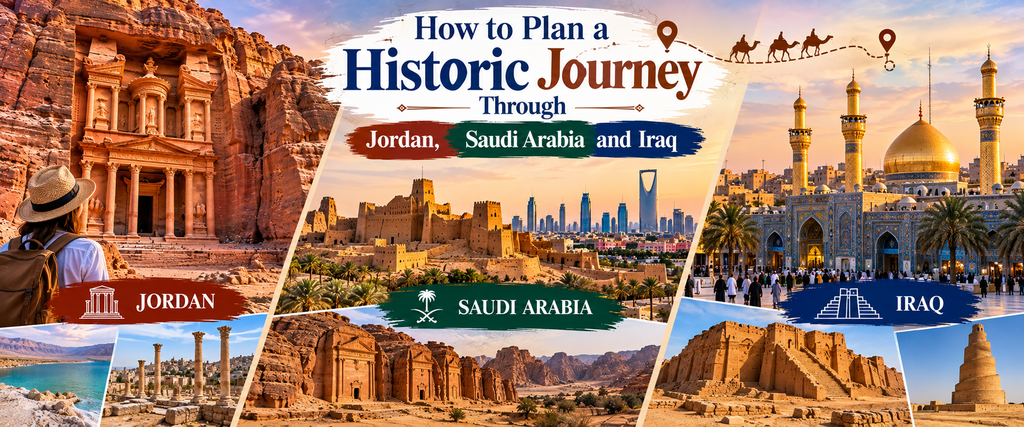
If you have ever dreamed of walking through the footsteps of ancient civilizations, the Middle East is home to some of the most profound historical and archaeological treasures on the planet. A multi-country journey spanning Jordan, Saudi Arabia, and Iraq offers a breathtaking dive into the cradle of human history—from the rose-red cliffs of Petra and the majestic dunes of AlUla to the ancient ziggurats of Mesopotamia.
Planning a trip that crosses three distinct nations might feel a bit overwhelming at first, but with the right preparation, it becomes the adventure of a lifetime. Here is a practical, step-by-step guide to crafting your historic Middle Eastern itinerary while sorting out the essential travel logistics.
Step 1: Mapping Out Your Historic Itinerary
To get the most out of your journey, give yourself at least two to three weeks. Here is a quick snapshot of what a well-rounded historic route looks like:
- Jordan (3–4 Days): Begin in Amman, explore the Roman ruins of Jerash, float in the Dead Sea, and spend a couple of days wandering through the lost city of Petra and camping under the stars in Wadi Rum.
- Saudi Arabia (4–6 Days): Cross into the Kingdom to witness the seamless blend of ancient heritage and modern transformation. Visit the UNESCO World Heritage site of Hegra (Madain Salih) in AlUla, explore the historic mud-brick alleyways of Diriyah in Riyadh, and experience the cultural richness of Jeddah’s historic district (Al-Balad).
- Iraq (5–7 Days): Conclude your journey in the cradle of civilization. Explore the bustling streets of Baghdad, marvel at the ancient ruins of Babylon, stand in awe before the Ziggurat of Ur, and visit the holy shrines of Najaf and Karbala.
Step 2: Securing Your Travel Visas Early
Crossing multiple borders means paperwork is your best friend. To ensure a smooth trip, you need to sort out your entry requirements well in advance. Fortunately, digital systems have made getting travel authorizations much easier than it used to be.
When planning your logistics, you can streamline your preparation by looking into the Jordan Tourist eVisa to kick off your adventure. Once you move on to the Kingdom, checking the Saudi Arabia Tourist Visa requirements will help you prepare your documents for entry. Finally, for the last leg of your trip, reviewing the Iraq eVisa required documents ensures you won't hit any unexpected delays before exploring Mesopotamia.
If paperwork isn't your favorite part of traveling, you don't have to navigate it alone. Working with professional visa services can take the stress completely off your shoulders:
- Reliable Travel Visa Services: A global approach that has successfully assisted numerous travelers in obtaining their documentation without hassle.
- Round-the-Clock Assistance: Reach out to experts 24/7 who are ready to support your application journey.
- Experienced Visa Consultants: Receive expert guidance tailored to your specific nationality to maximize your application's acceptance rate.
- Efficient Application Process: Complete your initial forms in just minutes through simplified, user-friendly digital portals.
Step 3: Packing Smart for Diverse Climates
The Middle East features diverse landscapes, ranging from chilly desert nights to warm, sunny days. Your packing list should prioritize modest, lightweight clothing that respects local customs and traditions, especially when visiting religious or conservative areas.
- Footwear: Bring a sturdy pair of broken-in walking shoes or hiking boots. You will be walking on uneven ancient stones, desert sand, and rugged archaeological terrain.
- Sun Protection: Pack a wide-brimmed hat, polarized sunglasses, and a high-SPF sunscreen. The desert sun can be intense even during cooler months.
- Adapters: Keep a universal power adapter handy so your camera and phone stay charged for all those unforgettable photo ops.
Step 4: Embracing Local Culture and Etiquette
One of the greatest joys of traveling through Jordan, Saudi Arabia, and Iraq is experiencing legendary Middle Eastern hospitality. Locals are deeply proud of their heritage and love sharing their culture with curious travelers.
- Learn a Few Arabic Phrases: Simple words like Salam Alaikum (Peace be upon you) and Shukran (Thank you) go a long way in building warm connections.
- Respect Local Customs: Dress modestly, ask permission before taking photographs of local residents, and be mindful of local prayer times and traditions.
Final Thoughts
A journey through Jordan, Saudi Arabia, and Iraq is much more than just a vacation—it is an immersive history lesson written across stone, sand, and soul. By mapping out your route thoughtfully and getting your documentation sorted ahead of time, you are setting yourself up for an unforgettable exploration of human history. Pack your bags, keep an open mind, and get ready for the adventure of a lifetime!
Comments