When most people think of Ethiopian cuisine, rich stews like doro wat served on top of spongy, fermented injera instantly come to mind. But beyond the famous sourdough flatbread lies a hidden, deeply comforting world of traditional baking. For the curious food traveller, discovering Ethiopia's regional breads is a journey through ancient clay ovens, smoky wood fires, and recipes passed down through generations.
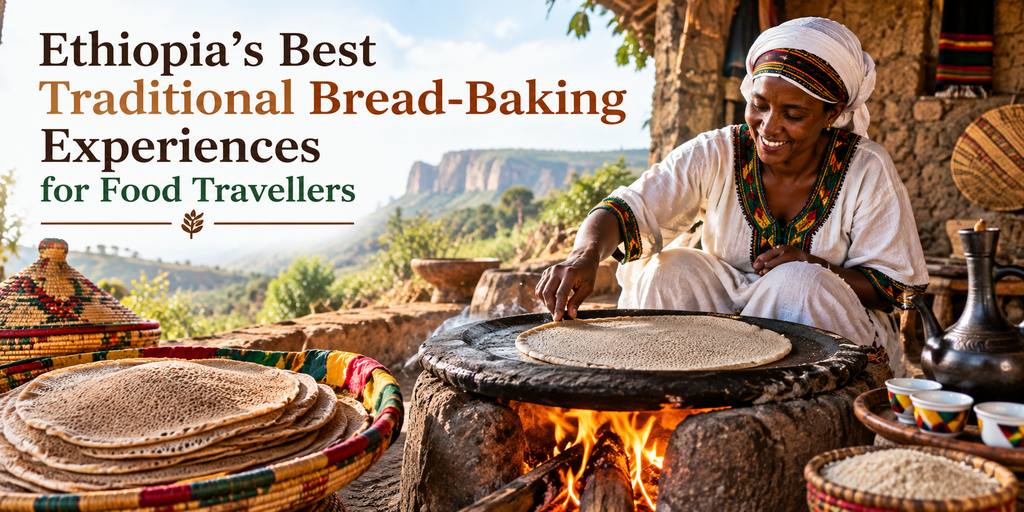
If you are planning a culinary adventure to East Africa, here is your ultimate guide to the best traditional bread-baking experiences in Ethiopia, along with how you can easily prepare for your upcoming trip.
1. Experiencing Injera Making in Addis Ababa
No culinary tour of Ethiopia starts anywhere else than with injera. Made from teff—a tiny, highly nutritious ancient grain native to the Ethiopian highlands—making injera is both a science and an art form.
- The Experience: Join a local cooking class in the bustling capital of Addis Ababa. You will learn how to mix the teff flour with water and a starter culture called ersho, allowing it to ferment for several days until it develops its signature tangy flavor.
- The Highlight: Watch your host pour the batter in a mesmerizing spiral onto a massive clay griddle (mitad) heated by an open wood fire. As it cooks, you will see steam form thousands of tiny holes—locally known as the "eyes"—which create the perfect texture for scooping up rich wats.
2. Baking Kocho with the Gurage People
Deep in the lush regions south of Addis Ababa lies a unique bread tradition that surprises many first-time visitors: kocho, a thick, dense flatbread made from the false banana tree (Enset).
- The Experience: Visiting the Gurage or Sidama communities offers a rare look into Enset processing. The starchy pulp of the plant is scraped, mixed, and left to ferment in pits underground for months or years.
- The Highlight: Participate in shaping the fermented dough and baking it directly in hot coals and embers. Paired with spiced butter or local cheese (ayib), kocho provides an earthy, filling taste of rural Ethiopian heritage.
3. Enjoying Golden Dabo in Historical Gondar
While flatbreads dominate everyday meals, leavened wheat bread known as dabo holds a special place during holidays, family gatherings, and religious celebrations in northern historic towns like Gondar.
- The Experience: In many traditional highland kitchens, dabo is mixed with honey, cardamom, and sometimes clarified butter (niter kibbeh), giving it a rich, golden aroma that fills the entire neighborhood.
- The Highlight: Unlike everyday flatbreads, dabo is traditionally wrapped in large, clean leaves (usually Enset or banana leaves) and baked inside a traditional clay oven or directly buried under hot coals. Breaking into a warm loaf of freshly baked dabo fresh from the fire is an unforgettable sensory treat.
Tips for Food Travellers Visiting Ethiopia
Planning your dream trip to taste Ethiopia's authentic flavors requires a bit of preparation. Before you can pack your bags and taste test these incredible breads, you will need to get your official travel documents in order. You can easily apply for Ethiopia Visa online in just a few minutes using a simplified form to ensure your trip starts smoothly.
Why Choose Us for Your Travel Needs?
- Reliable Travel Visa Services: Our global approach has assisted numerous travelers in obtaining their Visa.
- Round-the-Clock Assistance: Reach out to us 24/7, and our experts will respond within 72 hours.
- Experienced Visa Consultants: Receive expert guidance to ensure the acceptance of your application.
- Efficient Visa Application Process: Apply for your travel documents seamlessly with our dedicated support team.
Whether you are dreaming of the tangy bubbles of fresh injera or the smoky warmth of a highland clay oven, Ethiopia offers a feast for every food lover. Pack your appetite, get your paperwork sorted quickly, and get ready for the culinary adventure of a lifetime!
Comments